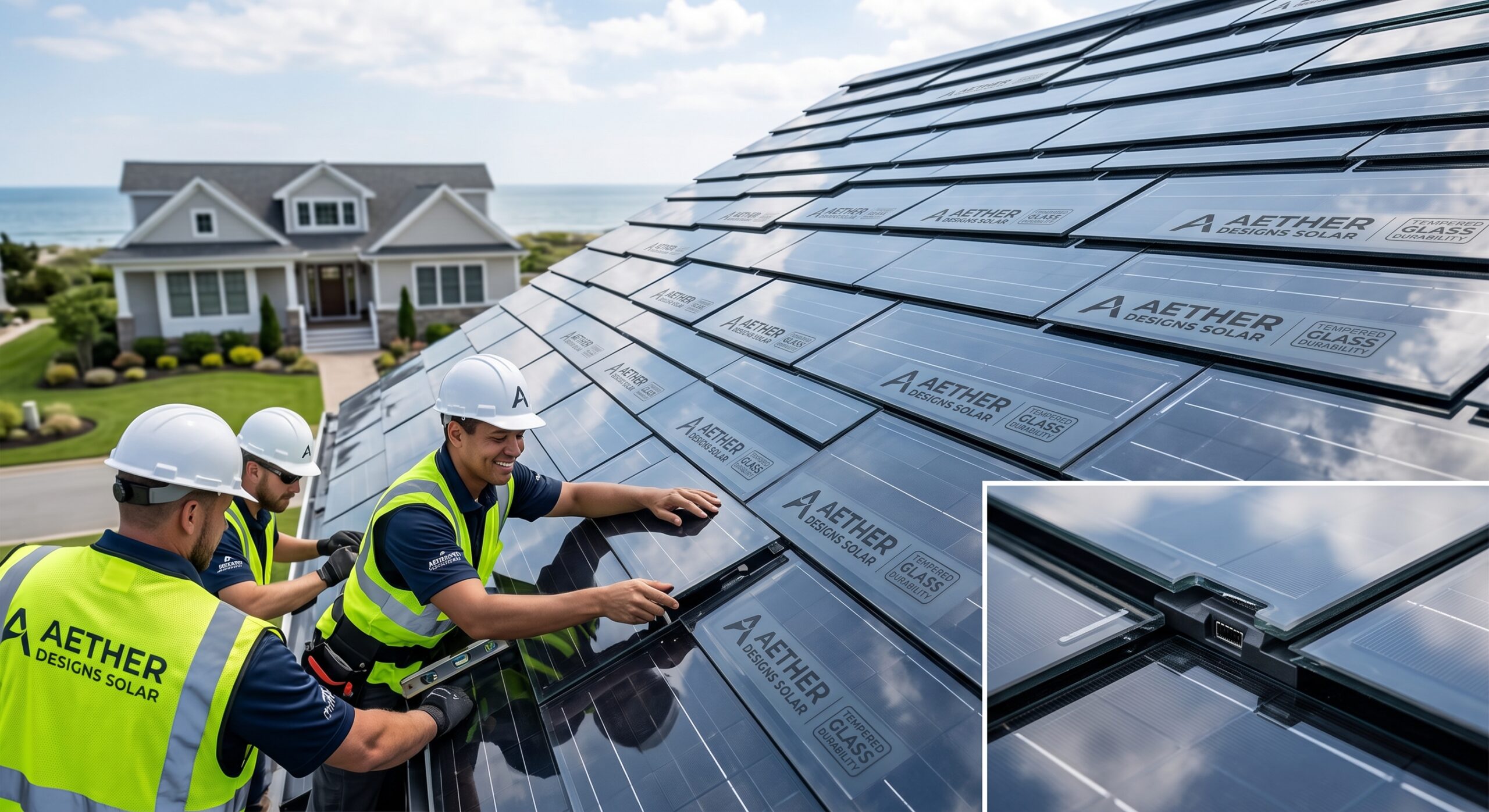
When you think of “glass,” words like fragile, delicate, or handle with care probably come to mind. You certainly wouldn’t think of putting it on your roof to defend your home against hail, heavy winds, and baking heat.
But tempered glass is a completely different beast. For modern, premium solar shingles—which pull double duty as both your structural roof and your solar power generator—tempered glass isn’t just a viable option. It is the absolute gold standard, easily outmatching traditional roofing metals in real-world durability.
Let’s dive into the science of why this material is a total powerhouse, why it outperforms metal on a roof, and why it’s transforming the future of solar roofing.
The Strength Myth: Why Tempered Glass Beats Metal on the Roof
When people ask if tempered glass is “as strong as metal,” they usually picture a thin window pane vs. a sheet of steel. But engineered, architectural-grade tempered glass operates on an entirely different level.
To understand why, we have to look at how it’s made. The glass undergoes a specialized thermal process, heated to extreme temperatures and then blasted with high-pressure cold air. This locks the core in intense tension while keeping the outer layer in massive compression.
When you compare how metal and tempered glass actually handle the elements over a 30-year lifespan, glass emerges as the superior defensive shield:
- No Denting or Deformation: When large hail or a heavy branch hits a metal roof, the metal flexes and permanently dents. This ruins the sleek look of the home and can create weak points where water pools. Tempered glass doesn’t dent. It has an incredibly high elastic limit, meaning it repels impacts completely, remaining flawlessly flat and pristine.
- Immunity to the Elements: Metal’s worst enemies are rust, corrosion, and oxidation—especially if you live anywhere near salt air or high humidity. Over time, protective coatings on metal can scratch or degrade, inviting rust. Tempered glass is completely inert. It never rusts, corrodes, or degrades, making it practically immortal against coastal weather and acid rain.
- Thermal Stability: Metals expand and contract significantly as temperatures cycle from freezing nights to blistering hot days. This constant movement can back out fasteners and strain seals over time. Tempered glass is highly dimensionally stable, maintaining its exact shape and tight seal no matter how hot the sun gets.
For the practical, brutal realities of a rooftop, tempered glass provides an armored, unyielding shell that metal simply cannot match.
Why Tempered Glass is a Superior Roofing Material for Solar Shingles
Solar shingles need to be a structural roof first and a clean power plant second. Because you can’t cover a solar cell with opaque materials like metal or asphalt, tempered glass is the only material engineered to deliver both maximum protection and maximum energy output.
1. Armor-Clad Impact Resistance
Because of the heavy tempering process, these shingles are built like shields. Premium tempered glass solar shingles carry a Class 4 impact rating (the highest industry standard for hail resistance) and are certified to withstand winds up to 130+ mph. They comfortably take direct hits from massive hailstones that would easily tear asphalt shingles to shreds or permanently scar a metal roof.
2. Maximum, Uncompromising Light Transmittance
You can’t generate solar power without sunlight. Advanced solar glass is ultra-clear and treated with specialized anti-reflective coatings. This allows maximum light penetration to the photovoltaic cells below while acting as an impenetrable barrier against moisture, ensuring your roof stays highly efficient for decades without the glass clouding or yellowing.
3. “Infinity” Longevity and Low Maintenance
Asphalt shingles dry out, crack, and lose their protective granules within 15 to 20 years. Tempered glass doesn’t age from UV exposure; thirty years of intense sunlight won’t degrade its molecular structure. Furthermore, because the glass surface is incredibly smooth, rain naturally washes away dirt, dust, and pollen, making the roof practically self-cleaning. It’s why high-end glass solar roofs are built to last for 25 to 50 years.
4. Flawless, Modern Aesthetics
Traditional rack-mounted solar panels can look clunky and bolted-on. Glass solar shingles sit completely flush with your roofline. They offer a seamless, deep, reflective architectural look that mimics the premium aesthetic of slate or luxury slate tiles, drastically boosting a home’s curb appeal and property value.
💡 The Bottom Line
Tempered glass isn’t just a substitute for traditional roofing; it’s a massive upgrade. By combining the extreme, dent-proof durability required to survive the worst storms with the perfect transparency needed to power your home, tempered glass is the undisputed heavyweight champion of modern building materials.
The future of roofing isn’t just about shelter anymore—it’s about power, and tempered glass is making it happen.